


Unlock strategies in our business guide to reducing cost-to-serve without increasing churn, balancing efficiency and customer care.
Reducing cost-to-serve while protecting customer loyalty requires precision. Cutting indiscriminately can drive repeat contacts, lower lifetime value, and damage your brand. Targeted investments, on the other hand, unlock scalable efficiency and better experiences. This business guide to reducing cost-to-serve without increasing churn breaks down what drives cost-to-serve, how to pinpoint waste, and which operational levers reduce spend without sacrificing satisfaction or revenue. It includes practical frameworks, actionable metrics, and proven cost-cutting strategies, spanning self-service, AI-assisted support, workforce optimization, and geo-diversification, that help your teams deliver more with less.
Understanding Cost-to-Serve
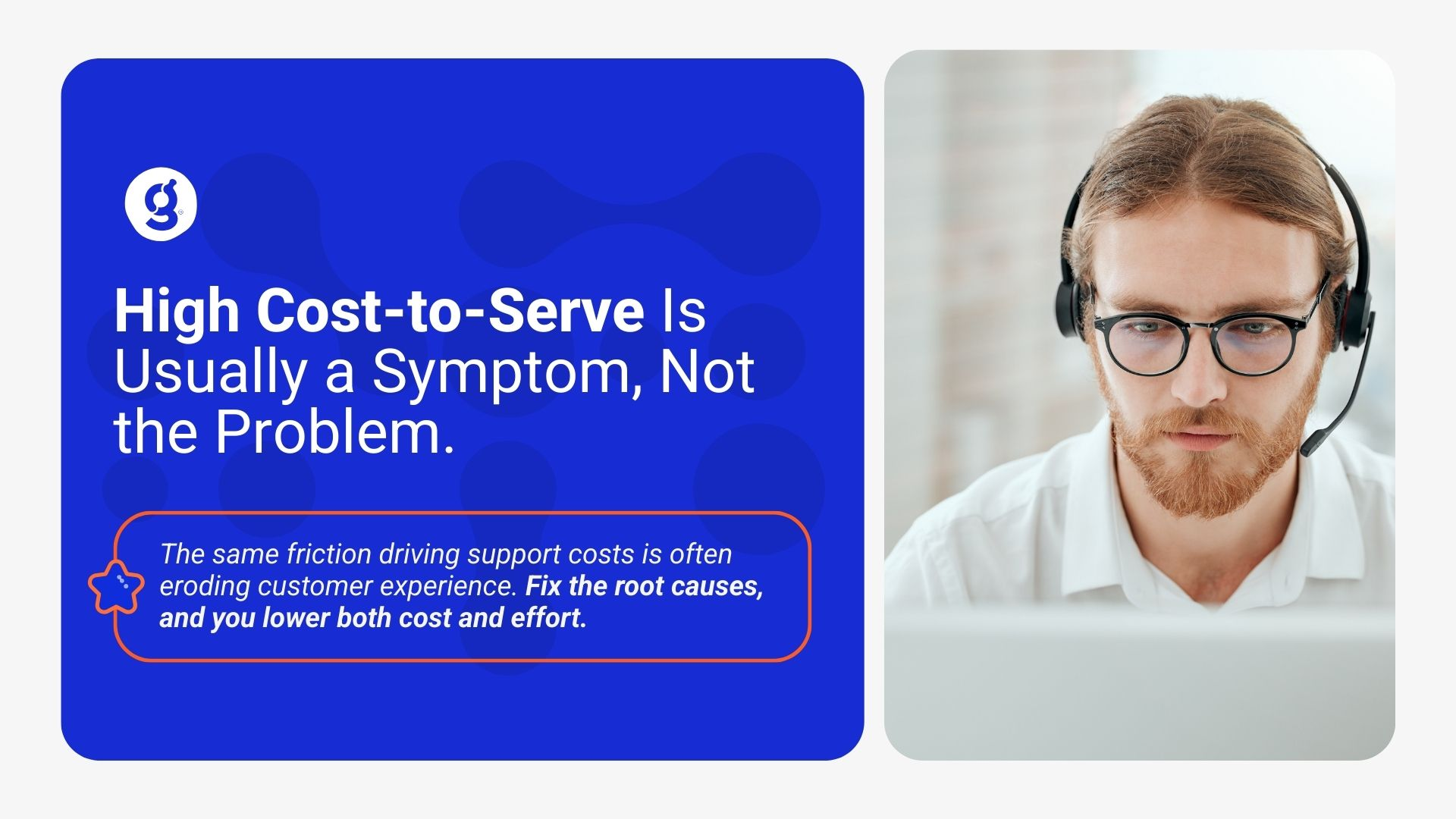
Cost-to-serve (CTS) is the fully loaded cost to deliver and support your product or service for a customer or segment. It connects expenses to real customer behaviors and journey steps, revealing where costs concentrate and why. A disciplined approach to cost reduction starts with understanding CTS at a granular level, then applying a cost reduction strategy that aligns with customer outcomes.
Core components of cost-to-serve include:
- Service and support: contact center labor, training, quality assurance, tools, and vendor fees
- Fulfillment and logistics: warehousing, shipping, returns, and reverse logistics
- Onboarding and education: implementation, setup, and customer training
- Technology and tooling: CRM, ticketing, knowledge bases, automation, and integrations
- Exceptions and remediation: credits, escalations, field visits, rework, and broken journey fixes
- Overhead and compliance: management time, reporting, legal, and regulatory adherence
Some frequent questions around CTS include:
- Why does CTS matter for customer satisfaction?: The same friction that inflates cost also erodes experience. Long hold times, multiple transfers, and repeated contacts together raise costs and frustration. Streamlined journeys, first-contact resolution, and proactive updates lower both cost and effort, often lifting Net Promoter Score and Customer Satisfaction in tandem. True cost-to-serve optimization works because it reduces effort rather than limiting support.
- What is the impact of CTS on profitability?: CTS directly influences gross margin and lifetime value. Two customers paying the same price can deliver very different profits if one requires frequent escalations or costly returns. Segment-level CTS enables smarter pricing, packaging, and service tiers that protect margin without degrading service. When you reduce cost-to-serve by removing root causes, you simultaneously cut business costs and protect retention.
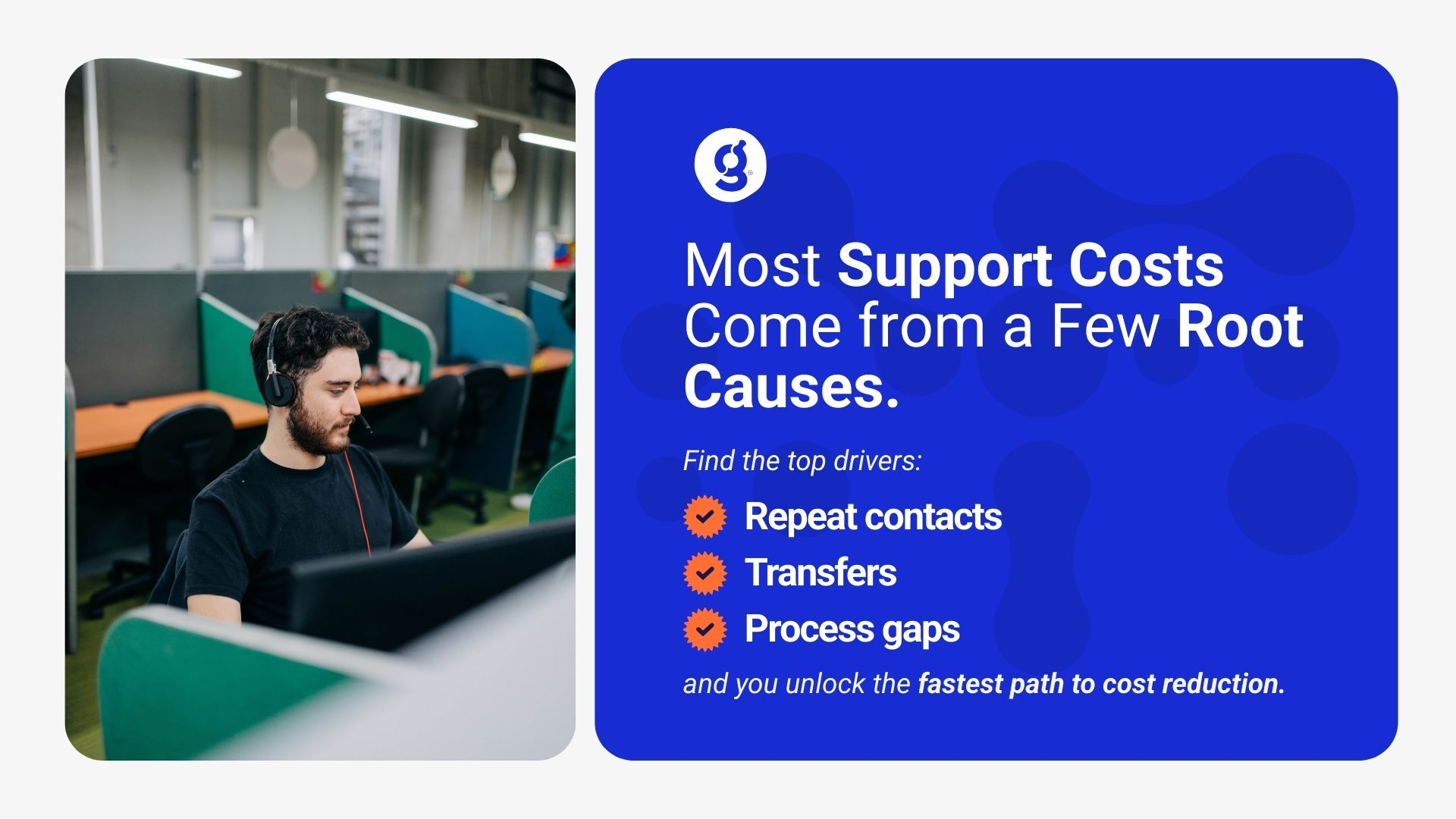
- Why does blunt cost-cutting backfire?: Shrinking support hours, removing human help, or over-automating complex issues shifts effort to customers, fueling repeat contacts and churn. Durable savings come from removing root causes of demand and waste, not from reducing assistance regardless of need. Wise cost-cutting strategies focus on the problems that create contacts and rework, balancing courage with care.
Identifying Key Cost Drivers
Start with a diagnostic that ties operational data to customer journeys. The objective is to isolate the few drivers that create most costs and churn risk.
Analyze service processes for inefficiencies:
- Map top contact reasons and volumes by channel; quantify repeat contacts and transfers
- Measure first-contact resolution, average handle time, and after-call work by issue type
- Identify knowledge gaps, policy friction, and process handoffs that cause rework
- Audit escalations and root causes; look for patterns tied to products, plans, or customer cohorts
Evaluate acquisition versus retention costs:
Acquiring a new customer often costs multiple times as much as retaining one. Compare acquisition payback periods to the incremental cost to save at-risk customers. In many cases, targeted retention efforts deliver better ROI than chasing net-new growth while service defects persist. A brave and disciplined cost-reduction strategy prioritizes fixes that protect loyalty over cuts that merely shift costs.
Assess product delivery and support costs end-to-end:
- Fulfillment: late shipments and damages drive contacts, refunds, and replacements
- Onboarding: unclear setup increases early-life support, a common churn hotspot
- Product complexity: confusing features increase assisted volume; simplify or improve education
- Policy and billing: invoice disputes, renewal surprises, and plan restrictions often drive contacts
Bring finance, operations, customer experience, and product together to quantify cost by journey stage. This cross-functional lens prevents optimizing support in isolation while upstream defects continue to create demand. It is also essential for cost-to-serve optimization because it clarifies where to reduce cost-to-serve without adding customer effort.
Strategies to Reduce Cost-to-Serve
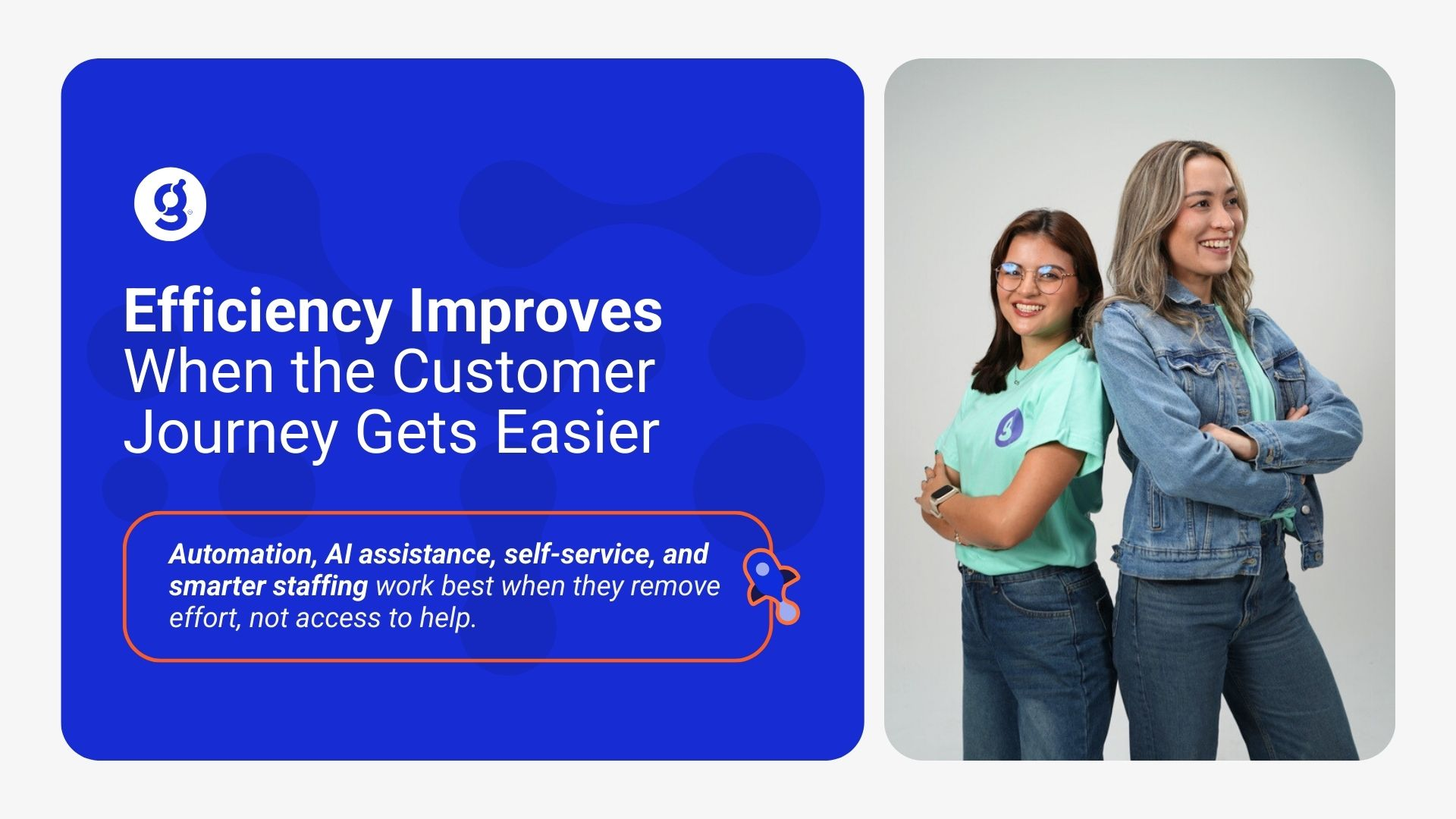
Effective cost reduction blends technology, process discipline, and human support. Focus on eliminating avoidable demand, simplifying journeys, and matching resources to the complexity of issues and customer value. These cost-cutting strategies deliver measurable cost reduction while elevating trust. They also address call center cost reduction and broader operational-efficiency goals for the contact center that sustain long-term performance.
Strategy #1: Use Technology to Automate Where It Improves Outcomes
- Intelligent routing: direct contacts by complexity and value to the best channel or agent
- AI chat and voice: deflect high-volume, low-variability tasks like password resets, order status, and FAQs
- Proactive notifications: provide shipment updates, outage alerts, and renewal reminders to reduce inbound volume
- Knowledge management: structure content for agents and customers; keep it current, concise, and task-oriented
Automation is a powerful lever to reduce cost-to-serve, but it must be applied with discernment. Use it to simplify tasks and accelerate answers, not to wall off help when it is still needed. In doing so, you cut business costs and uphold the service standards your brand promises.
Strategy #2: Optimize Workforce Management and Staffing
- Forecast demand by interval and contact reason; align staffing to peaks to avoid overtime and backlogs
- Skill-based queues and swarming models: reduce transfers and handle time for complex issues
- Cross-train agents on top contact drivers to improve first-contact resolution
- Targeted coaching and quality monitoring to improve consistency and reduce rework
Strong workforce practices deliver operational efficiency that contact center leaders rely on. Better forecasting, skill alignment, and coaching drive call center cost reduction without weakening the customer experience. This is cost reduction done with courage and care.
Strategy #3: Implement Self-Service Customers Prefer
- Design intuitive portals and help centers with clear pathways for top tasks
- Offer authenticated self-service for account updates, billing, returns, and cancellations with guardrails
- Embed step-by-step guides and interactive troubleshooting; track task completion and drop-off points
- Always include a seamless path to a human when automation fails, or confidence is low
Preferred self-service is a cornerstone of any cost reduction strategy. When customers can complete tasks effortlessly, you reduce cost-to-serve and increase satisfaction in the same motion.
Strategy #4: Deploy AI Assistance for Agents
- Real-time guidance: surface next-best actions, policies, and snippets during conversations
- Summarization and wrap-up: automate after-call work to shorten handle time and improve documentation
- Intent detection and knowledge suggestions: reduce search time and increase accuracy
- Quality and compliance monitoring: identify coaching opportunities without manual review
AI for agents enhances accuracy and speed, yielding measurable reductions in call center costs. It also supports operational efficiency contact center goals by streamlining workflows and raising first-contact resolution.
Strategy #5: Adopt Strategic Geo-Diversification
- Balance onshore, nearshore, and offshore teams to optimize cost, language coverage, and time zones
- Place specialized or high-sensitivity queues onshore; route routine work to cost-advantaged locations
- Build redundancy and disaster resilience by distributing sites across regions
- Standardize training, quality assurance, and knowledge so that dispersed teams deliver consistent experiences
Together, these tactics lower cost-to-serve by eliminating avoidable contacts, shortening resolution times, and aligning resources with issue complexity without diminishing customer satisfaction. This is cost-to-serve optimization in action, enabling you to cut business costs responsibly.
Maintaining Customer Satisfaction While Cutting Costs
Protecting loyalty requires clear guardrails as you streamline. Efficiency and empathy go hand in hand when you design changes around customer effort and outcomes. The right cost-cutting strategies strengthen relationships rather than strain them.
Balance Cost Reduction with Service Quality
- Prioritize fixes that remove effort for customers rather than removing access to help
- Use service tiers to match response times and channels to customer value and issue urgency
- Pilot changes on low-risk segments; monitor sentiment and resolution outcomes before scaling
Use Customer Feedback to Guide Change
- Close the loop on post-interaction surveys and identify friction themes by issue type
- Blend solicited feedback (CSAT, NPS) with unsolicited signals (reviews, social, and complaints)
- Test self-service content with customers; iterate based on task success rates and search terms
Keep Cost Initiatives Customer-Centric
- Fix upstream defects in product, billing, and logistics before constraining support
- Maintain easy escalation paths for edge cases and vulnerable customers
- Communicate changes transparently: explain customer benefits and how to get help when needed
A Framework for Sustainable Efficiency
- Define: Map journeys, quantify cost and effort by step, and set target outcomes
- Prioritize: Rank initiatives by impact on cost, churn risk, and customer effort
- Test: Run A/B pilot with clear success metrics and control groups
- Enable: Equip teams with training, playbooks, and tooling; update knowledge in lockstep
- Measure: Track cost-to-serve, first-contact resolution, repeat contact rate, and satisfaction together
- Govern: Establish cross-functional reviews to ensure savings do not erode loyalty
- Scale: Standardize successful patterns and retire legacy processes that add friction
Measuring the Impact of Cost Reduction Efforts
Measurement determines whether savings are real and sustainable. Pair financial metrics with customer outcomes to avoid short-term reductions that create long-term churn. In a true business guide to reducing cost-to-serve without increasing churn, metrics are the compass that keeps you on course.
Key Effort #1: Key Performance Indicators for Cost-to-Serve
- Cost per contact by channel and issue type
- Cost per order, activation, or return
- First-contact resolution and repeat contact rate within seven days
- Average handle time and after-call work time
- Self-service containment and task completion rates
- Escalation rate and back-office rework
Key Effort #2:Tracking Churn and Retention
- Logo churn and revenue churn (gross and net)
- Early-life churn (first 90 days) to assess onboarding effectiveness
- Save rate for at-risk cohorts and cancellation reasons coded by theme
- Cohort analysis linking CTS, effort scores, and retention over time
Key Effort #3:Assessing Long-Term Effects
- Use test-and-control groups to isolate the impact of changes on repeat contacts and churn
- Monitor lagging indicators such as renewal rates and product adoption, not just immediate cost drops
- Calculate ROI including quality adjustments: savings net of refunds, credits, and lost revenue due to churn
Create a single scorecard that displays cost-to-serve alongside CSAT, NPS, effort score, and churn. If cost declines while repeat contacts or effort rise, pause and recalibrate before scaling further.
Best Practices for Ongoing Cost Management
Enduring gains come from culture, cadence, and collaboration, not just one-time projects. Build mechanisms that continuously identify and eliminate waste while improving customer outcomes. This is where operational efficiency, through contact center practices and broader enterprise disciplines, converges.
Best Practice #1: Foster a Culture of Continuous Improvement
- Encourage frontline feedback to spot waste and policy friction
- Celebrate defect prevention metrics, not just volumes handled
- Share stories where a fix reduced both cost and effort
Best Practice #2: Review and Adjust Strategies Regularly
- Hold quarterly journey reviews focused on top contact drivers, root causes, and remedial actions
- Refresh knowledge and automation as products, policies, and seasonal patterns evolve
- Revisit location and staffing mix as demand and cost conditions change
Best Practice #3: Engage Employees in Cost Initiatives
- Involve agents in designing self-service and AI prompts; they understand edge cases
- Create clear career paths as automation absorbs routine work; elevate skills for complex support
- Offer incentives tied to first-contact resolution and defect prevention
When teams see cost management as improving the customer experience, not just cutting, they adopt new practices faster and sustain results longer. This mindset enables call center cost reduction that strengthens, rather than weakens, your brand.
Putting It All Together: A Practical CTS Playbook
Translate strategy into action with a staged approach that aligns stakeholders and de-risks change. Use this playbook to drive cost-to-serve optimization and cut business costs in ways customers perceive as improvements rather than compromises.
| Stage | Objectives | Key Activities | Success Metrics |
| Baseline | Establish current CTS and experience performance | Build an activity-based costing model; map top journeys; gather CSAT/NPS/effort and churn | CTS per channel/issue; FCR; repeat contacts; CSAT/NPS; churn by cohort |
| Prioritize | Identify high-ROI opportunities | Rank issues by volume, cost, and churn risk; run root cause analysis; define hypotheses | Shortlist of initiatives with expected savings and CX impact |
| Pilot | Validate impact safely | A/B tests for self-service, routing, and knowledge updates; set control groups | Reduction in repeat contacts; improved FCR; stable or higher CSAT |
| Enable | Prepare people and tech for scale | Training, playbooks, QA calibration; update KPIs and dashboards; refine governance | Agent adherence; knowledge usage; QA pass rates |
| Scale | Roll out proven changes | Standardize processes; extend to more channels/segments; monitor closely | Lower CTS; sustained CSAT/NPS; reduced churn |
| Sustain | Keep improving outcomes | Quarterly reviews; backlog of defects; continuous content and automation tuning | Annual CTS reduction; fewer high-effort journeys; higher retention |
Frequently Asked Questions
Q: How do I calculate cost-to-serve for different customer segments?
Start with fully loaded costs: labor, technology, overhead, logistics, and exceptions. Attribute costs to segments using drivers such as contact volume by issue type, average handle time, return rates, shipping costs, and onboarding effort. Divide by the number of customers or transactions in that segment to produce segment-level CTS. Where feasible, use activity-based costing to link expenses to actual behaviors and journey steps. This gives you clarity to reduce cost-to-serve where it matters most.
Q: What is the fastest way to reduce cost-to-serve without hurting satisfaction?
Target repeat contacts. Identify the top three reasons customers reach out more than once, fix the underlying causes, and update knowledge and self-service content accordingly. This typically lowers both cost and effort quickly without limiting access to help. It is a high-impact cost reduction rooted in customer-centric problem solving.
Q: When should I use automation versus human support?
Use automation for high-volume, low-variability tasks with clear rules and low emotional stakes. Rely on people for ambiguous, high-stakes, or emotionally charged issues. Ensure a smooth escalation from bots to agents, with full context transfer, so customers do not need to repeat themselves. Done right, automation contributes to call center cost reduction while improving experience.
Q: How do I measure whether self-service is working?
Track task completion rate, containment (no subsequent contact within seven days), search success, and customer effort scores. Review abandonment points to refine content and flows. Compare outcomes for self-service versus assisted paths for the same issue types to confirm parity or improvement in resolution quality. These measures support cost-to-serve optimization by validating real-world impact.
Q: What risks come with geo-diversification, and how do I manage them?
Common risks include cultural and language gaps, regulatory differences, and service inconsistency. Mitigate with standardized training and quality assurance, robust knowledge management, calibrated scorecards, and clear escalation paths. A hub-and-spoke model works well: Maintain complex or high-sensitivity queues in onshore hubs while scaling routine work across nearshore and offshore spokes. This approach balances cost reduction with quality control.
Q: How does AI-assisted support affect agent roles?
AI reduces low-value tasks such as wrap-up and knowledge searches, freeing agents to focus on complex problem-solving and relationship building. Invest in upskilling, decision frameworks, and empathy training so agents excel in higher-complexity interactions and deliver consistent outcomes. The result is operational efficiency that contact center leaders can measure and a cost-reduction strategy that elevates the human role.
Q: What if my cost-to-serve is high due to product defects?
Prioritize defect elimination. Form a cross-functional council linking customer experience, product, engineering, and operations. Use contact reasons and cost data to quantify impact and accelerate fixes. Improvements to product quality often deliver the largest and most durable CTS reductions, helping you cut business costs and prevent churn.
Examples of High-Impact CTS Initiatives
- Onboarding simplification: redesign setup guides and in-app walkthroughs to reduce early-life contacts; measure 90-day churn and self-serve completion
- Billing transparency: revamp invoice layouts and renewal notices; add proactive reminders to avoid surprises and disputes
- Returns automation: create an authenticated portal with pre-approved return labels and status tracking to cut calls and emails
- Knowledge refresh: rewrite the top 50 articles in plain language with step-by-step tasks; monitor agent search-to-resolution time
- Routing optimization: use predictive models to route based on intent, customer value, and complexity; track transfer rate and handle time deltas
- Proactive communications: trigger messages for shipment delays, service interruptions, and planned maintenance; monitor deflection and sentiment
These initiatives demonstrate how to reduce cost-to-serve thoughtfully, achieving call center cost reduction while improving the journeys customers rely on most.
Common Pitfalls and How to Avoid Them
- Automating broken processes: fix root causes before digitizing; otherwise, you scale the problem
- Over-relying on average handle time: optimize for first-contact resolution and effort, not just speed
- Ignoring early-life experience: the first 90 days often dictate retention; invest in onboarding and education
- Cutting access before enabling alternatives: launch self-service with proven task completion and an easy human path
- Measuring CTS in aggregate only: segment by issue type, channel, and cohort to see real drivers
- Underinvesting in knowledge: out-of-date or hard-to-find content inflates handle time and errors
Avoiding these pitfalls keeps your cost reduction strategy grounded in outcomes. It helps you cut business costs while staying true to your brand promise.
Next Steps
Reducing cost-to-serve starts with clarity. Begin with a focused assessment to quantify your current CTS, identify the top drivers of customer contact, and prioritize the issues creating the most operational friction. From there, launch targeted pilots, such as proactive notifications to reduce avoidable demand or knowledge and routing improvements, to increase first-contact resolution. Track results through a unified scorecard that measures cost-to-serve alongside key experience indicators like FCR, repeat contact rate, CSAT, and churn. As successful initiatives prove their value, scale them across channels and retire processes that add unnecessary effort.
The most sustainable path to lower cost-to-serve is designing experiences that make it easier for customers to get what they need. When journeys are simple, support is faster, and answers are clear, organizations spend less to serve customers, and customers are far more likely to stay.
If you’re looking to reduce cost-to-serve while strengthening customer loyalty, The Office Gurus can help. Our CX and contact center experts partner with organizations to streamline operations, deploy smarter support models, and implement scalable solutions that lower costs without sacrificing experience.
Contact The Office Gurus today to explore how we can help optimize your cost-to-serve strategy and build more efficient, customer-centric operations.