

Contact center outsourcing is entering a decisive phase in 2026, shaped by advances in artificial intelligence, higher customer expectations, and operating models built for flexibility and resilience. Outsourcing now extends far beyond cost containment. Leaders are looking for partners that deliver measurable customer outcomes, revenue impact, and brand differentiation at scale. This guide breaks down the top contact center outsourcing trends for 2026, reshaping the market, the challenges executives must address, the technologies accelerating performance, and how to select a BPO partner that aligns with your strategy and delivers sustained results.
The Evolving Landscape of Contact Center Outsourcing
The outsourcing model has shifted from transactional support to strategic customer experience partnerships. Organizations are consolidating vendors, standardizing on cloud platforms, and requiring real-time performance visibility through outcome-based contracts. Nearshore and offshore delivery remain essential, while onshore and work-from-home models broaden the talent pool and strengthen business continuity. These contact center trends 2026 embody not just efficiency, but empowered execution.
Multiple forces are driving this change. Customers expect fast, effortless, and personalized interactions across channels. Tight labor markets elevate the importance of employee experience and productivity. At the same time, regulatory scrutiny regarding data privacy and AI governance continues to increase, prompting stronger controls and accountability across global operations. This is where BPO trends intersect with customer service trends to create a new standard of excellence.
Technology is redefining outsourcing strategies. Cloud-native platforms, agent copilots, advanced analytics, and automated quality management have become standard capabilities. Enterprises use these tools to reduce handle time, increase first contact resolution, and personalize experiences at scale. As a result, BPOs are redesigning operating models, embedding automation into workflows, and using data to continuously measure and improve outcomes. These call center trends underscore a simple truth: the strongest results come from pairing smart tools with brave leadership.
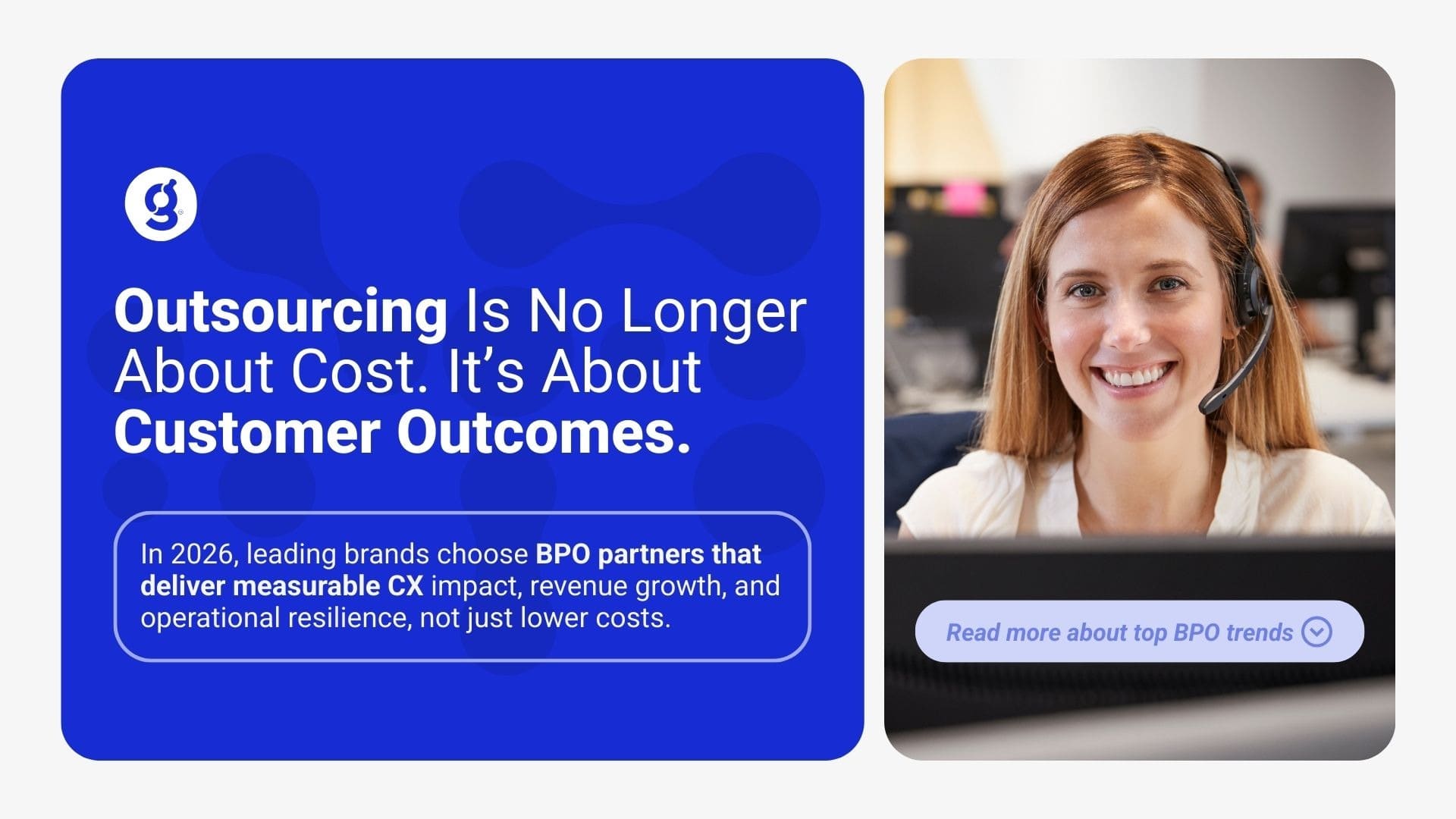
Choosing a partner requires a deeper evaluation than price alone. Executives should assess AI maturity, change management disciplines, security posture, and omnichannel fluency. Ask for proof of production AI use cases, time-to-value metrics, compliance certifications, and references that demonstrate CX and revenue results. The ability to co-create roadmaps, integrate with your data stack, and flex capacity across geographies will be a defining differentiator in 2026. This approach reflects the top contact center outsourcing trends for 2026 that reward both foresight and decisive action.
Key Trends Shaping Outsourcing in 2026
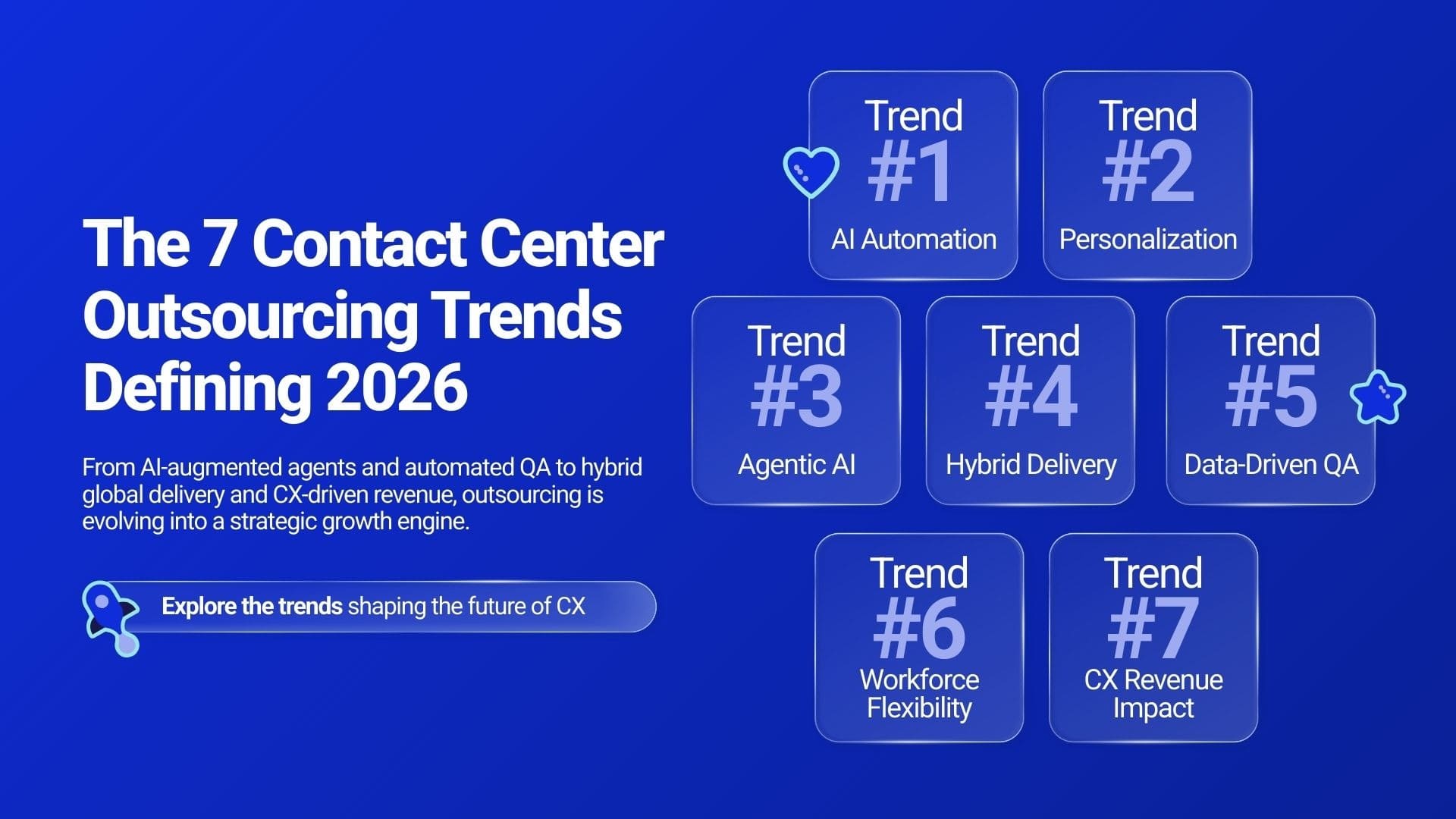
Trend #1 – AI and Automation Rise
Automation has moved from experimentation to scaled deployment. Intelligent virtual agents handle routine requests, reduce wait times, and route complex issues to skilled agents. In the back office, automation streamlines post-call tasks and updates CRM systems. The aim is not to replace people, but to free them from repetitive work so they can focus on empathy, judgment, and revenue opportunities. Among BPO industry trends, this is a cornerstone of customer service trends 2026.
Trend #2 – Customer Experience and Personalization
Providers are increasingly measured on experience metrics such as CSAT, NPS, sentiment, and effort. Personalization at scale, using unified customer profiles and real-time intent signals, improves resolution speed and loyalty. Outsourcers that combine data-driven insights with human-led service consistently deliver stronger outcomes. These contact center trends favor depth of insight and courageous execution.
Trend #3 – AI-Augmented Agents
Agent assist tools provide live guidance, next-best actions, policy lookups, summarization, and real-time transcription with sentiment signals. These copilots shorten training time, reduce errors, and enable consistent experiences. Effective programs set clear guardrails, maintain human oversight, and use feedback loops to refine prompts and workflows. As a call center trend, AI augmentation speaks to contact center trends that balance knowledge with action.
Trend #4 – Hybrid Global Delivery Becomes Standard
Optimal delivery blends onshore, nearshore, offshore, and remote models to balance cost, skill sets, time zone coverage, and risk. Many providers employ hub-and-spoke designs, centralized training and QA with distributed service teams, to standardize quality while flexing capacity to demand. This reflects BPO trends that prioritize resilience and adaptability.
Trend #5 – Data-Driven, Automated QA
Random-sample QA is being replaced by 100% coverage of interactions via speech and text analytics. Automated scoring assesses compliance, empathy, and resolution behaviors, while QA analysts focus on coaching and root-cause analysis. Digital scorecards calibrated by human review are quickly becoming the norm. These contact center trends support customer service by ensuring consistent quality at scale.
Trend #6 – Workforce Flexibility as a Differentiator
Elastic staffing, flexible scheduling, and AI-driven forecasting enable scaling for seasonality, launches, and unexpected spikes. Remote and hybrid work models expand access to specialized talent, particularly in technical support and regulated industries, while improving agent satisfaction and retention. These BPO industry trends build stronger teams and resilient outcomes.
Trend #7 – CX Emerges as a Revenue Engine
Conversational commerce, proactive outreach, and value-based selling are now integrated into service interactions. Agents use contextual cues to identify upsell, cross-sell, and retention opportunities without compromising service quality. Outsourcers increasingly commit to revenue KPIs, such as conversion rate, save rate, and lifetime value, alongside efficiency metrics. As you evaluate call center trends, this is a marker of strategic maturity.
Challenges for Executives Selecting the Right BPO Partner
Maintaining Quality and Consistency: Scaling quality across sites, channels, and languages requires standardized playbooks, real-time analytics, and automated QA. Verify that partners can unify processes across locations and provide transparent performance dashboards mapped to business outcomes. Within the top contact center outsourcing trends for 2026, this challenge demands both disciplined governance and bold leadership.
Keeping Pace with Customer Expectations: Customers expect seamless omnichannel experiences and rapid resolution. Look for partners with proven orchestration across voice, chat, messaging, email, and social, strong knowledge management, and the ability to update workflows quickly as products and policies change. These are core contact center trends that separate leaders from the rest.
Managing Data Security and Compliance: Global delivery spans multiple jurisdictions and regulatory requirements. Confirm that providers maintain robust controls such as SOC 2 Type II, ISO 27001, HIPAA, where applicable, and GDPR readiness for EU interactions, along with clear AI governance. Data minimization, encryption in transit and at rest, and role-based access should be standard. Ask how AI systems are audited for bias, accuracy, and compliance, and how incidents are tracked and remediated. This challenge is central to BPOs as trust becomes a differentiator.
Innovative Technologies Transforming Contact Center Outsourcing
Cloud Computing for Flexibility: Cloud-native platforms enable rapid scaling, faster rollout of new channels, and efficient integrations with CRM, CDP, and knowledge systems. They improve resiliency and support distributed workforces. Cloud architectures also simplify testing and deployment of AI features without operational disruption.
Analytics for Performance Improvement: Speech, text, and interaction analytics reveal customer intent, churn drivers, and coaching opportunities. Predictive models inform staffing, routing, and backlog management, while propensity models guide retention and conversion tactics. Real-time dashboards empower supervisors and enable proactive interventions before issues affect customers.
Omnichannel Integration: Customers switch between chat, email, messaging apps, social, and voice. Best-in-class providers orchestrate journeys across channels, preserving context and history to reduce effort. Centralized knowledge ensures consistent answers and accelerates resolution. This omnichannel foundation is essential for personalization and proactive service at scale. It is among the defining contact center trends for any brand seeking durable loyalty.
How to Select a BPO Partner in 2026
Finding the right BPO partner means aligning capabilities with strategic goals and validating the ability to deliver measurable outcomes. Use the checklist below to guide your evaluation for the best partner for your organization:
- AI and Automation Maturity: Request examples of production use cases across agent assist, self-service, and QA automation. Review time-to-value metrics and the processes used for prompt management, retraining, and model governance. These are central BPO outsourcing trends that reveal operational strength.
- Security and Compliance: Confirm certifications such as SOC 2 Type II and ISO 27001, HIPAA readiness where necessary, and GDPR compliance for EU interactions. Assess data minimization practices, encryption standards, role-based access, and incident response protocols. These BPO industry trends demand rigorous discipline and transparent reporting.
- Omnichannel Fluency: Validate orchestration across voice, chat, messaging, email, and social. Ensure continuity of context, unified knowledge, and consistent experience across channels and geographies.
- Operational Excellence: Review standardized playbooks, training frameworks, QA methodologies, and WFM practices. Ask for evidence of closed-loop performance systems that link analytics to coaching and continuous improvement. This call center trend separates reliable partners from risky bets.
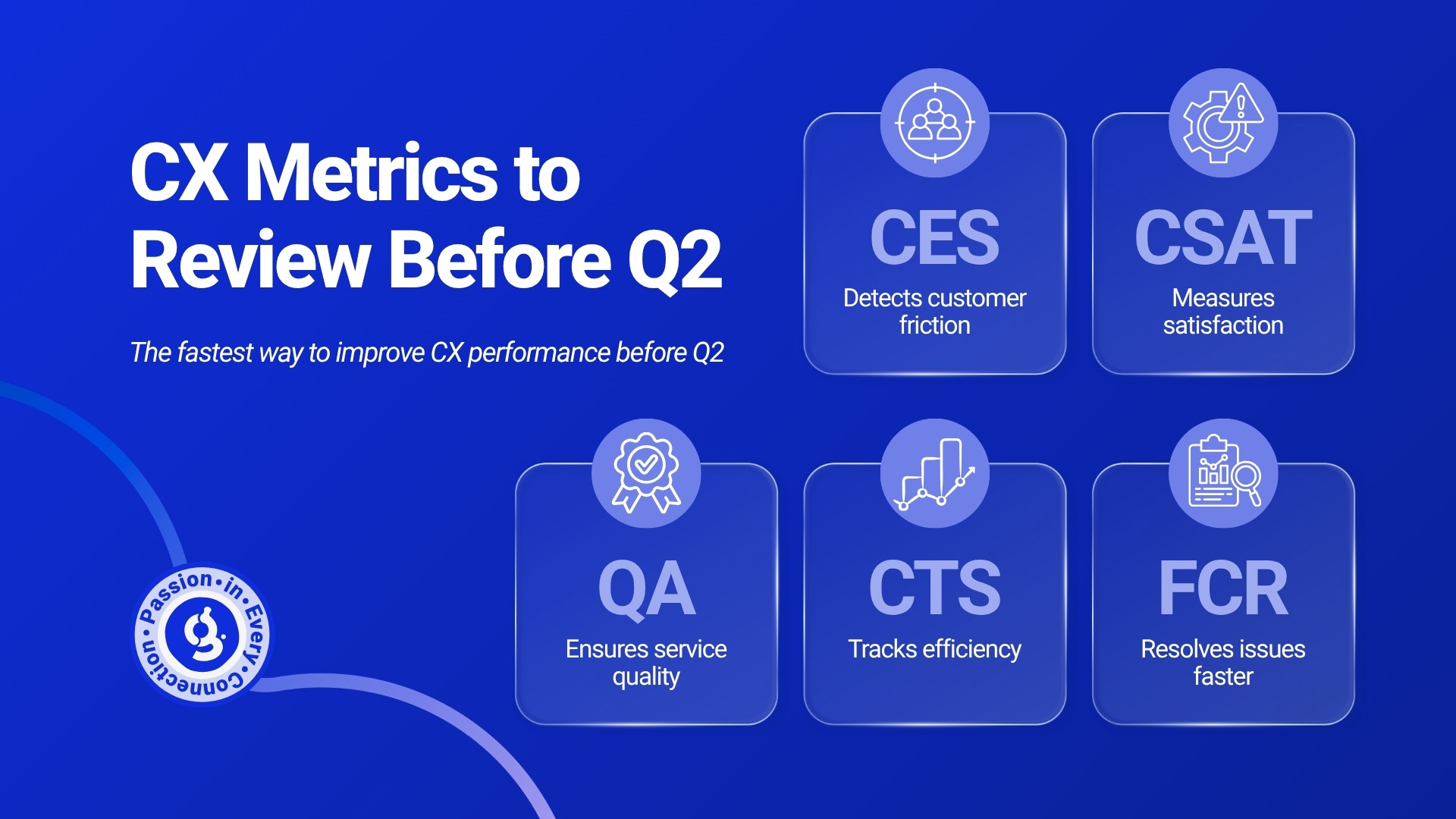
- Outcome-Based Contracting: Align on KPIs that span customer outcomes (CSAT, NPS, sentiment, effort), operational efficiency (AHT, FCR, transfer rate), and business results (conversion, retention, average order value, lifetime value). Seek baseline-to-post-implementation comparisons and real-time reporting. These BPO trends ensure shared accountability.
- Global Delivery Flexibility: Evaluate the ability to combine onshore, nearshore, offshore, and remote models. Confirm plans for surge capacity, seasonality, and specialized queues, as well as training and QA standardization across locations.
- Change Management: Determine how the provider handles new product launches, policy updates, and workflow changes. Look for structured playbooks, communication cadences, and stakeholder governance. This reflects BPO outsourcing trends that reward disciplined agility.
- Technology Integration: Ensure the partner can integrate with your CRM, CDP, ticketing, and knowledge systems. Review APIs, data pipelines, and identity management for secure, scalable connectivity. These contact center trends underscore the power of interoperable platforms.
- Cultural Alignment: Assess leadership accessibility, frontline development, and values that align with your brand. Calibrations, joint coaching sessions, and shared governance help preserve brand voice and standards. This is a customer service trend grounded in trust and shared purpose.
Sample KPI Framework for Outsourced CX Programs
| Category | Metrics | Purpose |
| Customer Outcomes | CSAT, NPS, sentiment, customer effort score | Measure experience quality and loyalty drivers |
| Operational Efficiency | AHT, FCR, transfer rate, queue abandonment | Track resolution speed and resource utilization |
| Revenue Impact | Conversion rate, save rate, average order value, lifetime value | Quantify growth and retention contributions |
| Quality and Compliance | QA scores, interaction coverage, policy adherence | Ensure consistency, accuracy, and risk controls |
| Workforce Health | Attrition, schedule adherence, and coaching completion | Monitor engagement and readiness |
Use this framework to bring focus to the effectiveness of specific contact center practices. It supports BPO industry trends that elevate transparency and drive courageous improvement.
Conclusion and Key Takeaways
Contact center outsourcing in 2026 is defined by AI-augmented agents, cloud-first operations, and seamless omnichannel experiences. The most successful organizations are moving beyond cost savings and using outsourcing to drive customer loyalty, operational efficiency, and revenue growth. To succeed, companies must choose partners that combine advanced technology, data-driven insights, and flexible global delivery models. The right BPO partner should demonstrate proven AI capabilities, strong security and compliance frameworks, and the ability to deliver measurable CX outcomes.
The Office Gurus helps organizations turn these trends into results. Our teams combine human expertise, advanced technology, and flexible delivery models to help brands improve customer experience, reduce operational costs, and unlock new revenue opportunities.
Ready to future-proof your contact center strategy?
Connect with The Office Gurus to explore how we can build a high-performance CX program tailored to your business goals.
Frequently Asked Questions
How can executives measure the impact of outsourcing beyond cost savings?
Use a balanced scorecard across customer outcomes (CSAT, NPS, sentiment, effort), operational efficiency (AHT, FCR, transfer rate), and business results (conversion, retention, average order value, lifetime value). Compare baseline to post-implementation outcomes and require visibility via real-time dashboards. This aligns with contact center trends that prioritize transparency.
What is the fastest way to benefit from AI without disrupting service?
Start with low-risk, high-impact use cases: agent-assisted knowledge retrieval and summarization, post-call automation, and AI-powered QA with 100% interaction coverage. Pilot in a single queue, measure results, tune guardrails, and then expand.
Is nearshore or offshore better in 2026?
The strongest results come from hybrid delivery. Use onshore for complex or regulated work, nearshore for language and cultural proximity, and offshore for scale and cost efficiency. Choose the blend that aligns with your customer profile, channels, and compliance requirements.
How do we maintain brand voice across outsourced teams?
Centralize knowledge and style guides, deploy conversation templates within agent assist tools, and use automated QA to score tone and compliance. Reinforce with regular calibrations and shared coaching sessions across locations. These practices are consistent with BPO industry trends focused on quality and consistency.
What safeguards should be in place for AI in customer interactions?
Implement human-in-the-loop review for critical workflows, strict data access controls, prompt governance, and bias testing. Ensure clear escalation paths to human agents and audit models for accuracy and compliance on a defined cadence.