


More technology hasn’t created more connection. That’s the paradox sitting at the center of customer experience today: brands have more speed, more channels, and more data than ever, yet the experience customers feel is often fragmented, impersonal, and transactional. Customer expectations are rising faster than most operations can adapt, and leaders are being asked to improve CX while reducing costs and onboarding a new wave of AI technology all at once.
Generative AI has only accelerated the gap. Over the last two years, it has reset what customers expect from every interaction: instant responses, personalized answers, intelligent interactions. Those expectations don’t stay contained to a contact center or a single brand; they follow customers everywhere.
This is where many leaders are falling behind, not because they don’t understand AI, but because they’re trying to apply it to an operating model that was never built for it. The role of a CX and workforce leader is being redefined in real time, along three lines: from optimizing individual channels to orchestrating full customer journeys, from reporting on what already happened to anticipating what’s next, and from managing volume to deliberately designing experiences.
AI will not replace your agents. It will replace the leaders who aren’t ready to lead in this new baseline.
It’s worth being direct about what AI does not do. It does not fix broken workflows; it accelerates them, flaws included. It does not create alignment across teams; it requires alignment to be in place already. And it does not replace strategy; it demands a sharper one. Every leader adopting AI right now should be asking a single question: are we using it to automate what we already do, or to redesign how we deliver outcomes? The first makes an operation more efficient. The second makes it more relevant. AI will not replace agents, but it will replace leaders who aren’t ready to lead in a world where seamless experience is the baseline, intelligence is assumed, and speed is the default expectation.
If your workflow is broken today, AI doesn’t fix it. It just breaks it faster, at scale.
Nowhere is this shift more concrete than inside workforce management itself. WFM is moving from reporting to predicting, from forecasting to scenario planning, from scheduling to optimizing, from reacting to deciding. The function’s central questions are changing, from “what happened” to “what will happen” to “what should we do.” That shift requires a new capability set from WFM leaders: the ability to validate AI, meaning understanding and questioning its outputs, connecting them to operational reality, and knowing enough about what a model is doing to challenge its recommendations, alongside the ability to model and decide, running scenarios and what-if analysis and balancing cost, service, capability, and risk in the same breath.
The leaders who pull ahead from here won’t be the ones with access to the most AI. They’ll be the ones who understand workforce management deeply while also building fluency in AI, data, and the business itself, and who know precisely what to automate, what to question, and what decisions still require human judgment. That combination, not the technology alone, is the real competitive advantage.
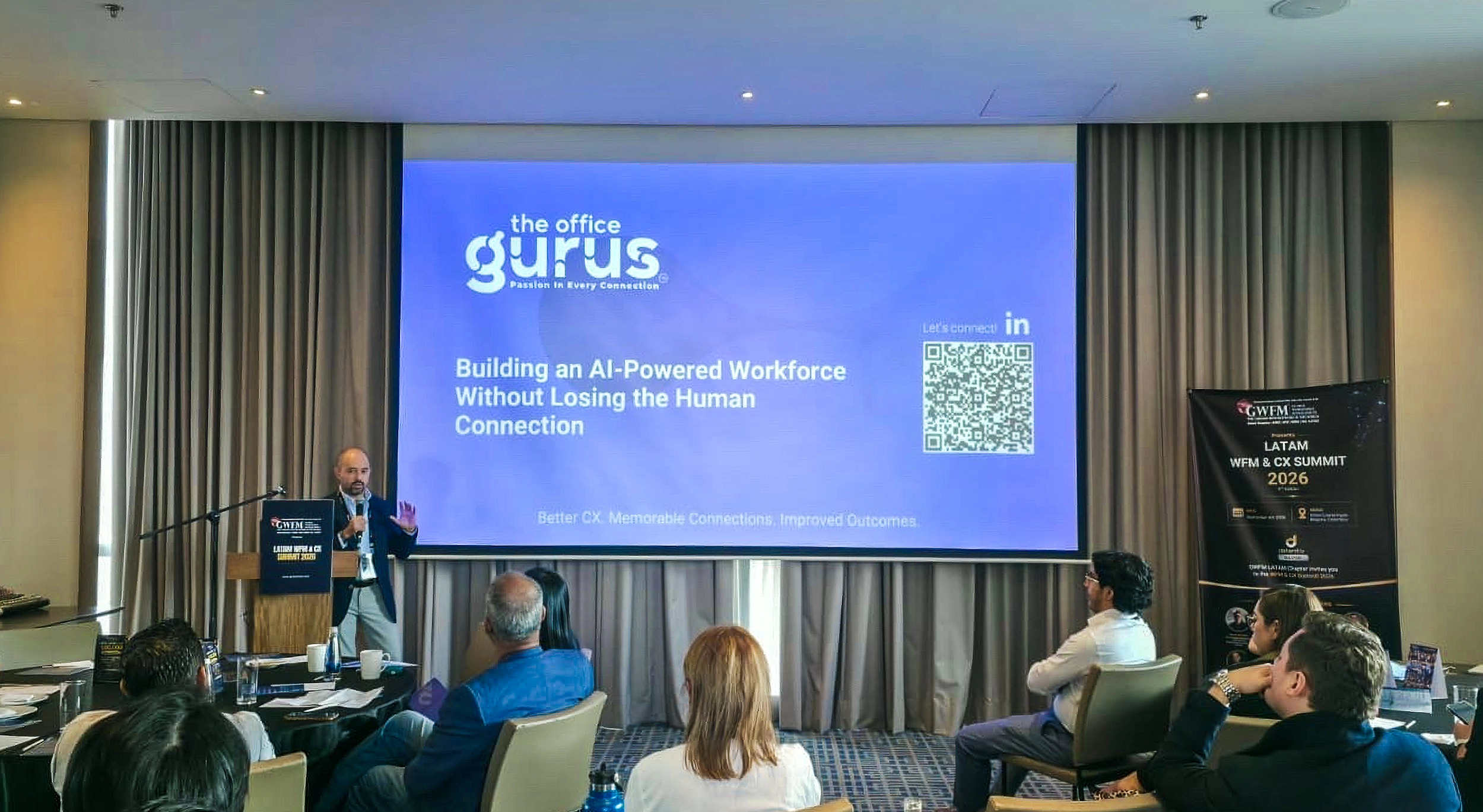
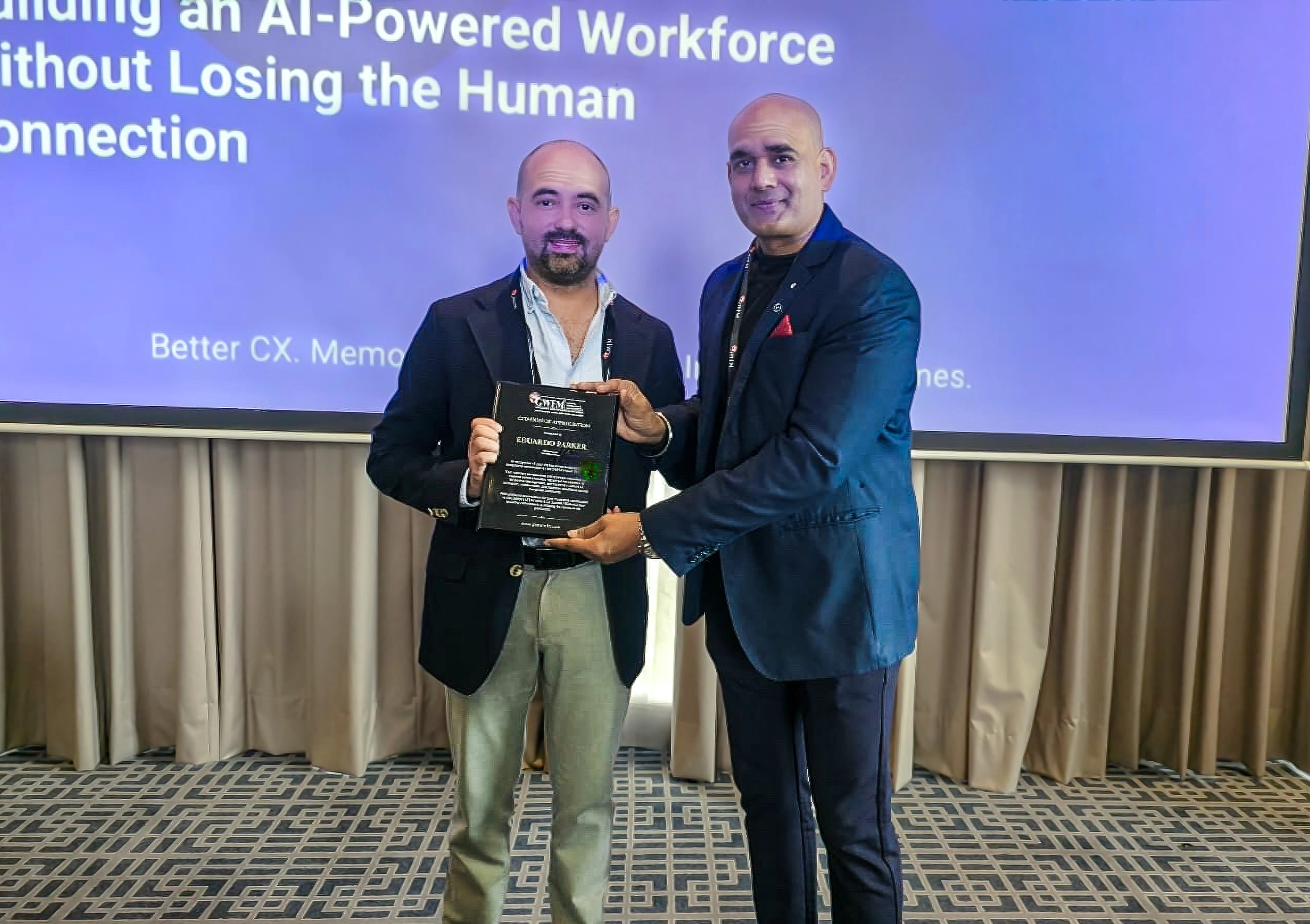
He shared this thinking in a featured session at the GWFM LATAM WFM & CX Summit 2026, marking Eduardo Parker’s third consecutive year presenting at the event; GWFM also recognized his contribution to its Global Think Tank with a Citation of Appreciation.